
UNIT I: Introduction to Physiology: The Cell and General Physiology
1. Functional Organization of the Human Body and Control of the "Internal Environment"
2. The Cell and Its Functions
3. Genetic Control of Protein Synthesis, Cell Function, and Cell Reproduction
UNIT II: Membrane Physiology, Nerve, and Muscle
4. Transport of Substances Through Cell Membranes
5. Membrane Potentials and Action Potentials
6. Contraction of Skeletal Muscle
7. Excitation of Skeletal Muscle: Neuromuscular Transmission and Excitation-Contraction Coupling
8. Excitation and Contraction of Smooth Muscle
UNIT III: The Heart
9. Cardiac Muscle; The Heart as a Pump and Function of the Heart Valves
10. Rhythmical Excitation of the Heart
11. Fundamentals of Electrocardiography
12. Electrocardiographic Interpretation of Cardiac Muscle and Coronary Blood Flow Abnormalities: Vectorial Analysis
13. Cardiac Arrhythmias and Their Electrocardiographic Interpretation
UNIT IV: The Circulation
14. Overview of the Circulation: Pressure, Flow, and Resistance
15. Vascular Distensibility and Functions of the Arterial and Venous Systems
16. The Microcirculation and Lymphatic System: Capillary Fluid Exchange, Interstitial Fluid, and Lymph Flow
17. Local and Humoral Control of Tissue Blood Flow
18. Nervous Regulation of the Circulation and Rapid Control of Arterial Pressure
19. Role of the Kidneys in Long-Term Control of Arterial Pressure and in Hypertension: The Integrated System for Arterial Pressure Regulation
20. Cardiac Output, Venous Return, and Their Regulation
21. Muscle Blood Flow and Cardiac Output During Exercise; The Coronary Circulation and Ischemic Heart Disease
22. Heart Failure
23. Heart Valves and Heart Sounds; Valvular and Congenital Heart Defects
24. Circulatory Shock and Its Treatment
UNIT V: The Body Fluids and Kidneys
25. Regulation of Body Fluid Compartments: Extracellular and Intracellular Fluids; Edema
26. The Urinary System: Functional Anatomy and Urine Formation By the Kidneys
27. Glomerular Filtration, Renal Blood Flow, and Their Control
28. Renal Tubular Reabsorption and Secretion
29. Urine Concentration and Dilution; Regulation of Extracellular Fluid Osmolarity and Sodium Concentration
30. Renal Regulation of Potassium, Calcium, Phosphate, and Magnesium; Integration of Renal Mechanisms for Control of Blood Volume and Extracellular Fluid Volume
31. Acid-Base Regulation
32. Diuretics and Kidney Diseases
UNIT VI: Blood Cells, Immunity, and Blood Coagulation
33. Red Blood Cells, Anemia, and Polycythemia
34. Resistance of the Body to Infection: I. Leukocytes, Granulocytes, the Monocyte-Macrophage System, and Inflammation
35. Resistance of the Body to Infection: II. Immunity and Allergy
36. Blood Types, Transfusion, and Tissue and Organ Transplantation
37. Hemostasis and Blood Coagulation
UNIT VII: Respiration
38. Pulmonary Ventilation
39. Pulmonary Circulation, Pulmonary Edema, and Pleural Fluid
40. Principles of Gas Exchange; Diffusion of Oxygen and Carbon Dioxide Through Respiratory Membranes
41. Transport of Oxygen and Carbon Dioxide in Blood and Tissue Fluids
42. Regulation of Respiration
43. Respiratory Insufficiency—Pathophysiology, Diagnosis, Oxygen Therapy
UNIT VIII: Aviation, Space, and Deep-Sea Diving Physiology
44. Aviation, High Altitude, and Space Physiology
45. Physiology of Deep-Sea Diving and Other Hyperbaric Conditions
UNIT IX: The Nervous System: A. General Principles and Sensory Physiology
46. Organization of the Nervous System, Basic Functions of Synapses and Neurotransmitters
47. Sensory Receptors and Neuronal Circuits for Processing Information
48. Somatic Sensations: I. General Organization, Tactile and Position Senses
49. Somatic Sensations: II. Pain, Headache, and Thermal Sensations
UNIT X: The Nervous System: B. The Special Senses
50. The Eye: I. Optics of Vision
51. The Eye: II. Receptor and Neural Function of the Retina
52. The Eye: III. Central Neurophysiology of Vision
53. The Sense of Hearing
54. The Chemical Senses—Taste and Smell
UNIT XI: The Nervous System: C. Motor and Integrative Neurophysiology
55. Spinal Cord Motor Functions; The Cord Reflexes
56. Cortical and Brain Stem Control of Motor Function
57. Cerebellum and Basal Ganglia Contributions to Overall Motor Control
58. Cerebral Cortex, Intellectual Functions of the Brain, Learning, and Memory
59. The Limbic System and the Hypothalamus—Behavioral and Motivational Mechanisms of the Brain
60. States of Brain Activity—Sleep, Brain Waves, Epilepsy, Psychoses, and Dementia
61. The Autonomic Nervous System and the Adrenal Medulla
62. Cerebral Blood Flow, Cerebrospinal Fluid, and Brain Metabolism
UNIT XII: Gastrointestinal Physiology
63. General Principles of Gastrointestinal Function—Motility, Nervous and Hormonal Control, Blood Circulation, and Microbiota
64. Propulsion and Mixing of Food in the Alimentary Tract
65. Secretory Functions of the Alimentary Tract
66. Digestion and Absorption in the Gastrointestinal Tract
67. Physiology of Gastrointestinal Disorders
UNIT XIII: Metabolism and Temperature Regulation
68. Metabolism of Carbohydrates and Formation of Adenosine Triphosphate
69. Lipid Metabolism
70. Protein Metabolism
71. The Liver
72. Dietary Balances; Regulation of Feeding; Obesity and Starvation; Vitamins and Minerals
73. Energetics and Metabolic Rate
74. Body Temperature Regulation and Fever
UNIT XIV: Endocrinology and Reproduction
75. Introduction to Endocrinology
76. Pituitary Hormones and Their Control By the Hypothalamus
77. Thyroid Metabolic Hormones
78. Adrenocortical Hormones
79. Insulin, Glucagon, and Diabetes Mellitus
80. Parathyroid Hormone, Calcitonin, Calcium and Phosphate Metabolism, Vitamin D, Bone, and Teeth
81. Reproductive and Hormonal Functions of the Male (and Function of the Pineal Gland)
82. Female Physiology Before Pregnancy and Female Hormones
83. Pregnancy and Lactation
84. Fetal and Neonatal Physiology
UNIT XV: Sports Physiology
85. Sports Physiology
Sujeto A Disponibilidad Tiempo de Entrega a de 20 a 30 días Hábiles
SKU
9780443111020
Precio Lista
COP 162.932
Precio CELSUS
COP 138.492
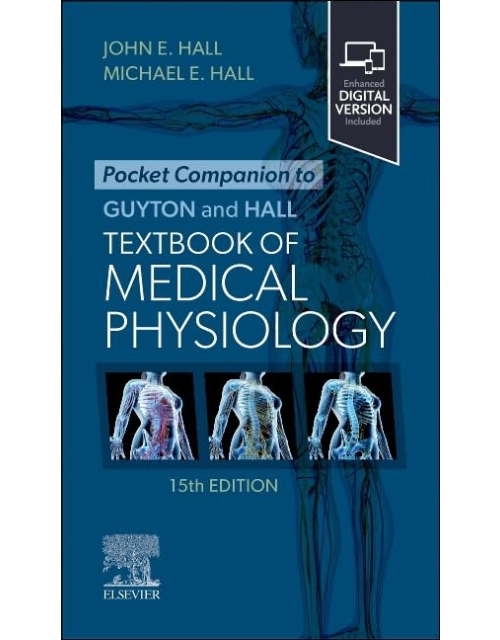
Generations of students have relied on the world’s foremost physiology textbook Guyton and Hall Textbook of Medical Physiology for the knowledge they need to master in this complex field. Pocket Companion to Guyton and Hall Textbook of Medical Physiology, Fifteenth Edition, contains the essential elements from the main text for high-yield study. This accessible, authoritative companion volume echoes the structure and content of the best-selling textbook, making it ideal for a quick, portable review or entry point into complex topics.
Key Features
- Puts the same reliable, useful knowledge found in Guyton and Hall Textbook of Medical Physiology, Fifteenth Edition, at your fingertips for easy access and quick reference
- Enables you to grasp key information quickly, thanks to concise, readable text
- Reflects the updated content of the Fifteenth Edition in a condensed, synopsis format, perfect for students who need a review or summary of each chapter or are in a flipped classroom situation
- Outlines key points and provides abundant cross-references using a parallel chapter organization, so you can easily locate more in-depth discussions in the main text when needed
- Enhanced eBook version is included. The eBook allows you to access all the text, and figures, with the ability to search, make notes and highlights, and have content read aloud
Author Information
John E. Hall,Arther C. Guyton Professor and Chair Department of Physiology and Biophysics Director, Mississippi Center for Obesity Research Director, Cardiorenal and Metabolic Diseases Research Center University of Mississippi Medical Center Jackson, Mississippi, USA;Michael E. Hall,Associate Professor of Medicine, Division of Cardiovascular Diseases, Director, Clinical and Population Science, Mississippi Center for Clinical and Translational Research, Jackson, Mississippi, USA
Cuéntanos tu experiencia con este repuesto