Novedades

The JOHN HOPKINS Manual of Gynecology and Obstetrics

Incluye Gastos de Importación

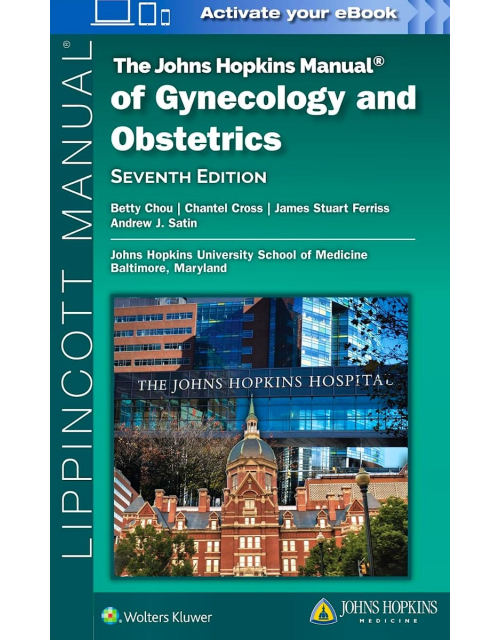
Compact, authoritative, and easy to consult, The Johns Hopkins Manual® of Gynecology and Obstetrics, 7th Edition, is a trusted, on-the-spot reference for virtually any issue you’ll encounter in obstetrics, high-risk obstetrics, gynecology, reproductive endocrinology, infertility, and gynecologic oncology. Culled from the collective expertise of residents and attending physicians at The Johns Hopkins University and edited by Drs. Betty Chou, Chantel Cross, James Stuart Ferriss, and Andrew J. Satin, this thoroughly revised edition is ideal for quick reference or as a highly effective review tool for medical students, resident trainees, and physicians in practice.Offers practical, dependable guidance in an easy-to-use, outline format modeled after The Washington Manual® of Medical Therapeutics
Contains new and updated information from cover to cover, including two new chapters on maternal physiology, obstetric emergencies, LGBTQ and transgender care, fertility preservation, fetal therapy and in utero interventions, and disparities in OB-GYN outcomes.
Provides portable, point-of-care information for house officers, medical students, and practitioners who encounter obstetric and gynecologic diseases and disorders in practice
Covers key topics such as female pelvic medicine/reconstructive surgery, multifetal pregnancy, substance abuse, psychiatric diseases, neoplastic diseases, hereditary cancer syndromes, UTIs and STIs, and more
Features clear illustrations and numerous tables throughout, as well as quick access to medication doses
 

The JOHN HOPKINS Manual of Gynecology and Obstetrics
  • Novedad
Libro Impreso
Precio Lista USD $ 95
Precio CELSUS USD $ 81

Compact, authoritative, and easy to consult, The Johns Hopkins Manual® of Gynecology and Obstetrics, 7th Edition, is a trusted, on-the-spot reference for virtually any issue you’ll encounter in obstetrics, high-risk obstetrics, gynecology, reproductive endocrinology, infertility, and gynecologic oncology. Culled from the collective expertise of residents and attending physicians at The Johns Hopkins University and edited by Drs. Betty Chou, Chantel Cross, James Stuart Ferriss, and Andrew J. Satin, this thoroughly revised edition is ideal for quick reference or as a highly effective review tool for medical students, resident trainees, and physicians in practice.Offers practical, dependable guidance in an easy-to-use, outline format modeled after The Washington Manual® of Medical Therapeutics
Contains new and updated information from cover to cover, including two new chapters on maternal physiology, obstetric emergencies, LGBTQ and transgender care, fertility preservation, fetal therapy and in utero interventions, and disparities in OB-GYN outcomes.
Provides portable, point-of-care information for house officers, medical students, and practitioners who encounter obstetric and gynecologic diseases and disorders in practice
Covers key topics such as female pelvic medicine/reconstructive surgery, multifetal pregnancy, substance abuse, psychiatric diseases, neoplastic diseases, hereditary cancer syndromes, UTIs and STIs, and more
Features clear illustrations and numerous tables throughout, as well as quick access to medication doses
 

  1. Cover
  2. Title Page
  3. Copyright
  4. Contributors
  5. Preface
  6. Contents
  7. Part I: Obstetrics
  8. 1 Prepregnancy Counseling and Prenatal Care
  9. PREPREGNANCY CARE AND COUNSELING
  10. Health Optimization and Medical Assessment
  11. Substance Use Assessment
  12. Psychiatric Health
  13. Review of Medications
  14. Infectious Disease Screening
  15. Immunizations
  16. Social Assessment
  17. Family History
  18. Maternal Age
  19. Nutritional Assessment
  20. Environmental Hazards and Toxins
  21. ROUTINE PRENATAL CARE
  22. Pregnancy Dating
  23. Nutrition, Weight Gain, and Exercise
  24. Immunizations
  25. Genetic Screening
  26. Screening Tests
  27. Diagnostic Tests
  28. 2 Maternal Physiology
  29. REPRODUCTIVE TRACT
  30. The Uterus
  31. Uterine Activity
  32. The Breasts
  33. HEMATOLOGIC
  34. Blood
  35. Coagulation
  36. CARDIOVASCULAR
  37. The Heart
  38. Cardiac Output
  39. Blood Pressure
  40. PULMONARY
  41. The Thorax
  42. Pulmonary Function
  43. Oxygen Consumption and Delivery
  44. Acid–Base Status
  45. GASTROINTESTINAL
  46. Metabolism
  47. GI Motility
  48. Liver and Gallbladder
  49. RENAL
  50. Kidneys
  51. Urinary Tract
  52. ENDOCRINE
  53. Pituitary Gland
  54. Thyroid Gland
  55. Adrenal Glands
  56. Pancreas
  57. IMMUNOLOGIC
  58. 3 Normal Labor and Delivery, Operative Delivery, and Malpresentations
  59. STAGES AND PHASES OF LABOR
  60. MECHANISM OF LABOR
  61. MANAGEMENT OF NORMAL LABOR AND DELIVERY
  62. Initial Assessment
  63. Management of Labor
  64. Induction of Labor
  65. Oxytocin Administration
  66. Labor Progress Assessment: Historical and Contemporary
  67. Interventions for Abnormal Labor
  68. FETAL HEART RATE EVALUATION
  69. Management of Nonreassuring Fetal Heart Rate Patterns
  70. ASSISTED SPONTANEOUS VAGINAL DELIVERY
  71. OPERATIVE VAGINAL DELIVERY
  72. Forceps Delivery
  73. Vacuum Delivery
  74. OBSTETRIC LACERATIONS
  75. SHOULDER DYSTOCIA
  76. CESAREAN SECTION
  77. VAGINAL BIRTH AFTER CESAREAN SECTION
  78. MALPRESENTATIONS
  79. Breech Presentation
  80. External Cephalic Version
  81. Abnormal Lie
  82. Obstetric Anesthesia
  83. TYPES OF OBSTETRIC ANALGESIA/ANESTHESIA
  84. Local Injection (Field Block)
  85. Peripheral Nerve Block (Pudendal, Paracervical)
  86. Regional Anesthesia (Epidural, Spinal)
  87. Systemic Analgesia
  88. General Anesthesia
  89. Anesthesia Consultation
  90. 4 Complications of Labor and Delivery
  91. UTERINE DEHISCENCE OR RUPTURE
  92. UMBILICAL CORD PROLAPSE
  93. EMBOLIC DISEASE
  94. Amniotic Fluid Embolism
  95. Venous Thromboembolism
  96. Postpartum Hemorrhage
  97. UTERINE INVERSION
  98. INTRA-AMNIOTIC INFECTION
  99. POSTPARTUM ENDOMYOMETRITIS
  100. SEPTIC PELVIC THROMBOPHLEBITIS
  101. 5 Antepartum Fetal Assessment
  102. BACKGROUND
  103. METHODS OF FETAL ASSESSMENT
  104. Fetal Movement
  105. Fetal Heart Rate Monitoring
  106. Fetal Heart Monitoring With Ultrasonography
  107. Fetal Blood Flow/Velocity/Dopplers
  108. CONFOUNDING FACTORS IN FETAL ASSESSMENT
  109. OVERALL SURVEILLANCE STRATEGY
  110. INDICATIONS FOR FETAL TESTING
  111. 6 Congenital Anomalies
  112. EPIDEMIOLOGY
  113. ETIOLOGY
  114. SCREENING AND MANAGEMENT
  115. CHROMOSOMAL ABNORMALITIES WITH ASSOCIATED CONGENITAL ANOMALIES
  116. Trisomy 21 (Down Syndrome)
  117. Trisomy 13 and 18
  118. DiGeorge Syndrome
  119. Turner Syndrome
  120. COMMON SPECIFIC CONGENITAL ANOMALIES
  121. 7 Prenatal Fetal Complications
  122. AMNIOTIC FLUID DISORDERS
  123. Polyhydramnios
  124. OLIGOHYDRAMNIOS
  125. FETAL GROWTH RESTRICTION
  126. FETAL HEMATOLOGIC DISORDERS
  127. Fetal Alloimmunization and Anemia
  128. FETAL THROMBOCYTOPENIA
  129. Maternal ITP-related Thrombocytopenia
  130. Neonatal Alloimmune Thrombocytopenia
  131. FETAL ARRHYTHMIAS
  132. Irregular Rhythms
  133. Tachyarrhythmias
  134. Bradyarrhythmias
  135. FETAL HYDROPS
  136. LATE-TERM AND POSTTERM PREGNANCY
  137. INTRAUTERINE FETAL DEMISE
  138. 8 Preterm Labor, Cervical Insufficiency and Preterm Prelabor Rupture of Membranes
  139. PRETERM LABOR
  140. Definitions
  141. Incidence and Significance
  142. Risk Factors
  143. Steps to Minimize Risk of Preterm Labor and Delivery
  144. Evaluation
  145. Management
  146. Route of Delivery Varies by Gestational Age
  147. CERVICAL INSUFFICIENCY
  148. Definitions
  149. Incidence and Significance
  150. Risk Factors
  151. Management
  152. PRETERM PRELABOR RUPTURE OF MEMBRANES
  153. Definitions
  154. Incidence and Significance
  155. Risk Factors
  156. Evaluation
  157. Management
  158. PERIVIABLE BIRTH
  159. Definition
  160. Management
  161. 9 Third-Trimester Bleeding and Placental Disorders
  162. PLACENTA PREVIA
  163. Epidemiology
  164. Diagnosis
  165. Complications
  166. Management
  167. PLACENTAL ABRUPTION
  168. Epidemiology
  169. Etiology
  170. Diagnosis
  171. Complications
  172. Management
  173. VASA PREVIA
  174. Epidemiology
  175. Etiology
  176. Diagnosis
  177. Management
  178. PLACENTA ACCRETA SPECTRUM
  179. Epidemiology
  180. Etiology
  181. Diagnosis
  182. Complications
  183. Management
  184. Surgical Planning
  185. 10 Perinatal Infections
  186. VIRAL INFECTIONS
  187. BACTERIAL INFECTIONS
  188. PROTOZOAN INFECTIONS
  189. 11 Multifetal Gestation
  190. DIAGNOSIS
  191. ANTEPARTUM MANAGEMENT
  192. MATERNAL COMPLICATIONS
  193. FETAL COMPLICATIONS
  194. DELIVERY
  195. SELECTIVE FETAL REDUCTION
  196. 12 Fetal Therapy and In Utero Interventions
  197. INTRODUCTION TO FETAL THERAPY
  198. TRANSPLACENTAL THERAPY
  199. Anesthesia Considerations for In Utero Procedures
  200. ULTRASOUND-GUIDED PROCEDURES
  201. FETOSCOPIC SURGERY
  202. OPEN FETAL SURGERY
  203. EXIT PROCEDURE
  204. 13 Hypertensive Disorders of Pregnancy
  205. DEFINITIONS
  206. CHRONIC HYPERTENSION
  207. GESTATIONAL HYPERTENSION
  208. PREECLAMPSIA
  209. MAGNESIUM SULFATE MANAGEMENT
  210. Acute Antihypertensive Therapy Options
  211. Late Postpartum Preeclampsia with Severe Features
  212. HELLP SYNDROME
  213. ECLAMPSIA
  214. 14 Endocrine Disorders of Pregnancy
  215. DIABETES MELLITUS
  216. Pregestational Diabetes Mellitus
  217. Gestational Diabetes
  218. THYROID DISORDERS
  219. Thyroid Hormones in Pregnancy
  220. Hyperthyroid Conditions
  221. Hypothyroid Conditions
  222. Nodular Thyroid
  223. PARATHYROID DISORDERS
  224. Hyperparathyroidism
  225. Hypoparathyroidism
  226. PITUITARY DISORDERS
  227. Prolactinoma
  228. Sheehan Syndrome
  229. ADRENAL DISORDERS
  230. Cushing Syndrome
  231. Pheochromocytoma
  232. Adrenal Insufficiency
  233. 15 Cardiopulmonary Disorders of Pregnancy
  234. CARDIAC DISORDERS
  235. Cardiac Disease in Pregnancy
  236. Acquired Heart Disease
  237. Cardiovascular Drugs in Pregnancy
  238. RESPIRATORY DISORDERS
  239. Pulmonary Changes During Pregnancy
  240. Specific Respiratory Disorders
  241. 16 Genitourinary Assessment and Renal Disease in Pregnancy
  242. ASYMPTOMATIC BACTERIURIA
  243. ACUTE CYSTITIS AND PYELONEPHRITIS
  244. NEPHROLITHIASIS
  245. MATERNAL CONGENITAL ANOMALIES OF THE KIDNEYS AND URINARY TRACT (CAKUT)
  246. NEPHRITIC SYNDROME
  247. NEPHROTIC SYNDROME
  248. ACUTE KIDNEY INJURY
  249. CHRONIC KIDNEY DISEASE
  250. END-STAGE RENAL DISEASE AND RENAL REPLACEMENT THERAPY
  251. KIDNEY TRANSPLANT
  252. 17 Gastrointestinal Disorders in Pregnancy
  253. NAUSEA AND VOMITING OF PREGNANCY
  254. Evaluation/Diagnosis
  255. Management
  256. GASTROESOPHAGEAL REFLUX DISEASE
  257. Evaluation
  258. Diagnosis/Management
  259. PEPTIC ULCER DISEASE
  260. Evaluation/Diagnosis
  261. Management
  262. INFLAMMATORY BOWEL DISEASE
  263. Evaluation
  264. Management
  265. Pancreatitis
  266. Evaluation/Diagnosis
  267. Management
  268. CHOLELITHIASIS
  269. Evaluation
  270. Management
  271. INTRAHEPATIC CHOLESTASIS OF PREGNANCY
  272. Evaluation
  273. Diagnosis
  274. Management
  275. ACUTE FATTY LIVER OF PREGNANCY
  276. Evaluation
  277. Diagnosis
  278. Management
  279. CIRRHOSIS AND PORTAL HYPERTENSION
  280. BUDD–CHIARI SYNDROME (BC SYNDROME)
  281. OBESITY
  282. Management
  283. EFFECT OF PRIOR BARIATRIC SURGERY
  284. SECOND-LINE ANTIDIABETICS IN PREGNANCY
  285. 18 Autoimmune Diseases in Pregnancy
  286. GENERAL MANAGEMENT CONCERNS
  287. IMMUNOMODULATING THERAPIES IN PREGNANCY AND LACTATION
  288. COMMON AUTOIMMUNE DISEASES
  289. Systemic Lupus Erythematosus
  290. Antiphospholipid Syndrome
  291. Rheumatoid Arthritis
  292. Systemic Sclerosis (Scleroderma)
  293. Mixed Connective Tissue Disease
  294. Myasthenia Gravis
  295. Vasculitis Syndromes
  296. MULTIDISCIPLINARY CARE AND COLLABORATIVE APPROACH
  297. 19 Neurologic Disorders in Pregnancy
  298. HEADACHE
  299. Imaging/Diagnostics
  300. Common Obstetrical Causes of Headache
  301. Primary Headaches
  302. Secondary Headaches
  303. CARPAL TUNNEL SYNDROME
  304. CHRONIC NEUROLOGIC DISEASES
  305. Epilepsy
  306. Spinal Cord Injury
  307. Trigeminal Neuralgia in Pregnancy
  308. Bell Palsy in Pregnancy
  309. POSTPARTUM COMPRESSION NERVE INJURIES
  310. 20 Psychiatric Disease and Substance Use Disorder in the Pregnant and Postpartum Patient
  311. TAKING A MENTAL HEALTH HISTORY
  312. SCREENING TOOLS FOR EMOTIONAL CHANGES IN THE PERINATAL PATIENT
  313. TAKING A SUBSTANCE USE DISORDER HISTORY
  314. OVERALL APPROACH TO PERIPARTUM TREATMENT OF MENTAL HEALTH CONDITIONS
  315. “Risk–Risk” Framework for Treating Peripartum Patients
  316. PERIPARTUM TREATMENT OF PSYCHIATRIC ILLNESS
  317. Nonpharmacologic Therapies
  318. Pharmacotherapy
  319. Pregnancy-Specific Considerations
  320. Strategies for Prepregnancy Planning and Unplanned Pregnancy
  321. PERINATAL SUBSTANCE USE DISORDER
  322. Definitions and General Principles
  323. FREQUENTLY ENCOUNTERED SUBSTANCES
  324. MANAGEMENT AND REFERRAL
  325. MANAGEMENT
  326. Labor and Delivery Pain Management in Patients with Opioid Use Disorder
  327. 21 Hematologic Disorders and Thromboembolic Disease in Pregnancy
  328. MATERNAL HEMATOLOGIC DISORDERS
  329. Anemia
  330. Hemoglobinopathies
  331. Thrombocytopenia
  332. Clotting Disorders
  333. Thromboembolic Disease
  334. 22 Neoplastic Diseases in Pregnancy
  335. GENERAL CONCEPTS
  336. Cell-Free DNA Prenatal Testing
  337. Imaging
  338. Management and Treatment
  339. Specific Neoplastic Carcinomas
  340. Ovarian Carcinoma
  341. Breast Carcinoma
  342. Colorectal Carcinoma
  343. Melanoma
  344. Hematologic Carcinomas
  345. Gestational Trophoblastic Neoplasia
  346. Outcomes and Follow-Up
  347. Breastfeeding
  348. Future Pregnancy
  349. 23 Skin Conditions in Pregnancy
  350. PHYSIOLOGIC SKIN CONDITIONS OF PREGNANCY
  351. Hyperpigmentation
  352. Striae Gravidarum
  353. Skin Tags
  354. Vascular Changes
  355. PRURITUS GRAVIDARUM (IDIOPATHIC PRURITUS)
  356. Pathologic Dermatoses of Pregnancy
  357. EFFECT OF PREGNANCY ON COMMON SKIN CONDITIONS
  358. 24 Surgical Disease and Trauma in Pregnancy
  359. PERIOPERATIVE CONSIDERATIONS FOR NONOBSTETRIC SURGERY
  360. Anatomic and Physiologic Changes in Pregnancy
  361. Timing of Surgery
  362. Diagnostic Imaging
  363. Anesthesia and Intraoperative Hemodynamics
  364. Surgical Technique
  365. Fetal Monitoring
  366. Venous Thromboembolism Prophylaxis
  367. Antibiotic Prophylaxis
  368. Postoperative Care
  369. SURGICAL DISEASES IN PREGNANCY
  370. Acute Appendicitis
  371. Acute Cholecystitis
  372. Small Bowel Obstruction
  373. Ovarian Cysts and Torsion
  374. Bariatric Surgery
  375. TRAUMA IN PREGNANCY
  376. Specific Traumatic Injuries
  377. Trauma Assessment in Pregnancy
  378. CARDIOPULMONARY RESUSCITATION IN PREGNANCY
  379. Perimortem or Emergency Cesarean Delivery
  380. 25 Postpartum Care and Breastfeeding
  381. ROUTINE POSTPARTUM CARE
  382. Normal Postpartum Physiology
  383. Perineum, Vulva, Vagina, and Pelvic Floor
  384. Postpartum Immunizations and Injections
  385. Discharge from the Hospital
  386. The Postpartum Care Continuum—The “4th Trimester”
  387. Lactation and Breastfeeding
  388. BREASTFEEDING RECOMMENDATIONS
  389. Contraindications to Breastfeeding
  390. Breastfeeding and Maternal Medications
  391. Breast Pain
  392. Decreased Milk Supply
  393. Weaning
  394. 26 Obstetric Emergencies
  395. OVERVIEW
  396. POSTPARTUM HEMORRHAGE
  397. HYPERTENSIVE CRISIS
  398. BREECH PRESENTATION
  399. SHOULDER DYSTOCIA
  400. MATERNAL CARDIOPULMONARY ARREST
  401. Part II: General Gynecology
  402. 27 Primary and Preventive Care
  403. Periodic GYN Wellness Exam
  404. CANCER SCREENING
  405. Breast Cancer
  406. Cervical Cancer
  407. Lung Cancer
  408. Colorectal Cancer
  409. Skin Cancer
  410. SCREENING FOR HEART AND VASCULAR CONDITIONS
  411. Hypertension
  412. Dyslipidemia
  413. Coronary Heart Disease
  414. METABOLIC, ENDOCRINE, AND NUTRITIONAL CONDITIONS
  415. Screening for Diabetes
  416. Screening for Osteoporosis
  417. Screening and Prevention of Obesity
  418. Nutrition
  419. INFECTIOUS DISEASES
  420. Screening for Human Immunodeficiency Virus
  421. Screening for Chlamydia and Gonorrhea
  422. Screening for Hepatitis C
  423. Other Infectious Disease Screening
  424. SCREENING FOR OTHER MEDICAL CONDITIONS
  425. Depression
  426. Screening for Anxiety
  427. Screening for Intimate Partner Violence
  428. Screening and Counseling for Substance Use Disorders
  429. SPECIAL POPULATIONS
  430. IMMUNIZATIONS
  431. 28 Infections of the Genital Tract
  432. SCREENING
  433. INFECTIONS OF THE LOWER FEMALE GENITAL TRACT
  434. Vulvar Infections
  435. Parasites
  436. Genital Ulcers
  437. Vaginitis
  438. Cervicitis
  439. INFECTIONS OF THE UPPER GENITAL TRACT
  440. Pelvic Inflammatory Disease
  441. 29 Contraception and Sterilization
  442. TIERS OF EFFECTIVENESS
  443. HIGHLY EFFECTIVE CONTRACEPTIVE METHODS
  444. Permanent Contraception (Sterilization)
  445. Long-Acting Reversible Contraception
  446. SHORT-ACTING HORMONAL CONTRACEPTIVE METHODS
  447. Progestin-Only Methods
  448. Combined Hormonal Contraceptives
  449. BARRIER METHODS
  450. Condoms
  451. Diaphragm
  452. Nonhormonal Intravaginal Gel
  453. FERTILITY AWARENESS–BASED METHODS
  454. EMERGENCY (POSTCOITAL) CONTRACEPTION
  455. 30 Abortion
  456. ABORTION
  457. Epidemiology and Safety
  458. Evaluation and Counseling
  459. PROCEDURAL ABORTION
  460. Procedural Abortion in the First Trimester
  461. Procedural Abortion in the Second Trimester
  462. MEDICATION ABORTION
  463. Medication Abortion in the First Trimester
  464. Medication Abortion in the Second Trimester (Labor Induction)
  465. FOLLOW-UP
  466. COMPLICATIONS
  467. Complications of Procedural Abortion
  468. Complications of First Trimester Medication Abortion
  469. 31 First and Second Trimester Pregnancy Loss and Ectopic Pregnancy
  470. ASSESSMENT OF PREGNANCY LOCATION AND VIABILITY IN THE FIRST TRIMESTER
  471. EARLY PREGNANCY LOSS IN THE FIRST TRIMESTER
  472. SECOND TRIMESTER PREGNANCY LOSS
  473. ECTOPIC PREGNANCY
  474. 32 Abnormal Uterine Bleeding
  475. DEFINITION OF ABNORMAL UTERINE BLEEDING
  476. DIFFERENTIAL DIAGNOSIS OF ABNORMAL UTERINE BLEEDING
  477. Premenarchal Bleeding
  478. Bleeding in Adolescents and Children
  479. Reproductive Age Abnormal Bleeding
  480. Postmenopausal Bleeding
  481. EVALUATION OF ABNORMAL UTERINE BLEEDING
  482. History
  483. Physical Examination
  484. Laboratory Testing
  485. IMAGING TECHNIQUES AND TISSUE SAMPLING METHODS
  486. Ultrasonography
  487. Computed Tomography (CT)
  488. Magnetic Resonance Imaging (MRI)
  489. Hysteroscopy
  490. Endometrial Sampling
  491. Dilation and Curettage (D&C)
  492. SPECIFIC CAUSES OF ABNORMAL UTERINE BLEEDING
  493. Pregnancy-Associated Bleeding
  494. Abnormal Uterine Bleeding in Nonpregnant Women
  495. MANAGEMENT OF ABNORMAL UTERINE BLEEDING
  496. Medical Therapy
  497. Surgical Treatment
  498. 33 Chronic Pelvic Pain
  499. DEFINITION
  500. KEY CONSIDERATIONS FOR EVALUATING CHRONIC PELVIC PAIN
  501. EVALUATION OF CHRONIC PELVIC PAIN
  502. Imaging and Laboratory Testing
  503. DIFFERENTIAL DIAGNOSIS OF CHRONIC PELVIC PAIN
  504. MANAGEMENT OF CHRONIC PELVIC PAIN
  505. Medical Therapy
  506. 34 Uterine Leiomyomas and Benign Adnexal Masses
  507. ADNEXAL MASSES
  508. Evaluation and Diagnosis
  509. The Pediatric and Adolescent Population
  510. Pregnancy
  511. The Unstable Patient
  512. Differentials
  513. UTERINE MASSES—LEIOMYOMA
  514. Leiomyoma
  515. Treatment for Leiomyomas
  516. 35 Breast Diseases
  517. BREAST EXAM
  518. COMMON BREAST DISORDERS AND COMPLAINTS
  519. Mastalgia
  520. Nipple Discharge
  521. Inflammatory Breast Disorders
  522. Skin Changes of the Breast
  523. Breast Mass
  524. BREAST CANCER
  525. Risk Factors
  526. Specific Hereditary Cancer Syndromes
  527. Screening and Prevention
  528. Presentation and Diagnosis
  529. Premalignant Breast Lesions
  530. Malignant Breast Lesions
  531. Staging and Prognostic Factors
  532. Treatment
  533. SPECIAL CONSIDERATIONS IN BREAST DISEASE
  534. Metastatic or Advanced Breast Disease
  535. Screening after Breast Augmentation or Reconstruction
  536. Pregnancy and Breast Disease
  537. 36 Benign Vulvar Disorders
  538. ANATOMY OF THE VULVA
  539. APPROACH TO DIAGNOSING VULVAR DISEASE
  540. PRURITIC VULVAR LESIONS
  541. Infections
  542. Dermatoses
  543. Contact Dermatitis
  544. Systemic Diseases
  545. PAINFUL VULVAR LESIONS
  546. Infectious Causes
  547. Systemic Disease or Condition
  548. VULVAR PAIN SYNDROMES
  549. BENIGN VULVAR CYSTS
  550. Bartholin Gland Cyst
  551. Epidermal Inclusion Cyst
  552. Gartner Duct Cyst
  553. Skene Duct Cyst
  554. 37 Female Sexual Function and Alterations in Sexual Functioning
  555. EPIDEMIOLOGY
  556. SCREENING FOR SEXUAL WELLNESS AND FUNCTION
  557. ESTABLISHING CONCEPTS OF SEXUAL HEALTH AND WELLNESS
  558. FRIES Model of Consent
  559. Societal Influences
  560. PHYSIOLOGY OF SEXUAL FUNCTION
  561. THEORIES OF SEXUAL FUNCTION
  562. DOMAINS OF SEXUALITY
  563. ALTERATIONS IN FUNCTIONING: ASSESSMENT
  564. History Taking
  565. Physical Exam
  566. ALTERATIONS IN FUNCTIONING: DIAGNOSIS
  567. Female Orgasmic Disorder
  568. Genito-Pelvic Pain/Penetration Disorder (GPPPD)
  569. Substance/Medication-Induced Sexual Dysfunction
  570. TREATMENTS
  571. FDA-Approved Medications
  572. Vaginismus and Vulvodynia
  573. SPECIAL CONSIDERATIONS AND POPULATIONS
  574. 38 LGBTQ and Transgender Care
  575. OVERVIEW AND DEFINITIONS
  576. BARRIERS TO HEALTH CARE AND DISCRIMINATION
  577. Discrimination in Health Care
  578. Creating a Safe and Affirming Health Care Environment for Gender and Sexual Minority Patients
  579. Avoiding Assumptions of Heterosexuality or Cisgender Identity
  580. GYNECOLOGIC AND OBSTETRICAL CARE OF GENDER AND SEXUAL MINORITY PATIENTS
  581. Comprehensive Sexual History and Key Points for Routine OB/GYN Care: Five Ps
  582. Menstrual Health
  583. Chronic Pelvic Pain
  584. Cancer Screening and Cancer Care
  585. GENDER TRANSITION
  586. Overview
  587. Masculinizing Gender Transition
  588. 39 Pediatric Gynecology
  589. GYNECOLOGIC EVALUATION OF A PREPUBERTAL CHILD
  590. General Pediatric Physical Exam
  591. Pediatric Pelvic Exam: Positioning
  592. Pediatric Pelvic Exam: Assessment
  593. Pediatric Exam: Documentation
  594. GYNECOLOGIC EVALUATION OF AN ADOLESCENT
  595. Special Considerations in Care of the Adolescent
  596. Adolescent Gynecologic Exam
  597. COMMON PEDIATRIC GYNECOLOGY COMPLAINTS
  598. Vulvovaginitis
  599. Prepubertal Vaginal Bleeding
  600. Traumatic Injuries
  601. Sexual Abuse
  602. Labial Adhesions
  603. Adnexal Masses/Ovarian Torsion
  604. Surgical Considerations for Laparoscopy in Children
  605. DISORDERS OF PUBERTY
  606. Delayed Puberty
  607. Precocious Puberty
  608. Premature Thelarche
  609. CONGENITAL ANOMALIES OF THE FEMALE REPRODUCTIVE TRACT
  610. Part III: Reproductive Endocrinology and Infertility
  611. 40 The Menstrual Cycle
  612. MENSTRUAL CYCLE OVERVIEW
  613. PHASES OF THE MENSTRUAL CYCLE
  614. The Early Follicular Phase
  615. The Mid-Follicular Phase
  616. The Late-Follicular Phase
  617. Ovulation
  618. The Luteal Phase
  619. 41 Infertility and Assisted Reproductive Technologies
  620. INFERTILITY
  621. Definitions
  622. Incidence
  623. ETIOLOGIES
  624. Ovarian Factor
  625. Uterine Factor
  626. Tubal Factor
  627. Cervical Factor
  628. Male Factor
  629. INFERTILITY EVALUATION
  630. Indications for Evaluation
  631. History and Physical Examination
  632. Evaluation for Structural Factors
  633. Evaluation for Male Factor
  634. Workup No Longer Recommended
  635. TREATMENT FOR INFERTILITY
  636. Treatment of Ovulatory Disorders
  637. Treatment of Endometriosis
  638. Treatment of Uterine Factor
  639. Treatment of Tubal Factor
  640. Treatment of Male Factors
  641. TREATMENTS BEYOND OVULATION INDUCTION WITH TIMED INTERCOURSE
  642. Intrauterine Insemination
  643. Assisted Reproductive Technologies
  644. Preimplantation Genetic Testing (PGT)
  645. OOCYTE RETRIEVAL, CULTURE, FERTILIZATION, AND TRANSFER
  646. THIRD-PARTY REPRODUCTION
  647. COMPLICATIONS OF ASSISTED REPRODUCTIVE TECHNOLOGIES
  648. Ovarian Hyperstimulation Syndrome
  649. Multiple Pregnancy
  650. Heterotopic Pregnancy
  651. Pregnancy Outcomes
  652. Fetal/Neonatal Effects
  653. Effects of ICSI
  654. 42 Fertility Preservation
  655. PLANNED FERTILITY PRESERVATION
  656. Age-Related Decline in Fertility
  657. Ideal Candidates for Planned Fertility Preservation
  658. Success Rates
  659. Counseling
  660. FERTILITY PRESERVATION FOR PATIENTS RECEIVING GONADOTOXIC TREATMENT OR GONADECTOMY
  661. Cancer Data: Incidence, Increased Survival, and Reduced Fertility
  662. Chemotherapy
  663. Radiation
  664. Immediate or Random Start Stimulation for Oocyte or Embryo Cryopreservation
  665. Ovarian Transposition
  666. Ovarian Tissue Cryopreservation
  667. Reproduction in Cancer Survivors
  668. Posthumous Reproduction
  669. ENDOMETRIOSIS
  670. TRANSGENDER MALES/GENDER DIVERSE INDIVIDUALS
  671. 43 Recurrent Pregnancy Loss
  672. EPIDEMIOLOGY AND DEFINITION
  673. ETIOLOGIES
  674. Genetic
  675. Uterine Pathology
  676. Endocrine/Metabolic Dysfunction
  677. Antiphospholipid Syndrome
  678. Hereditary Thrombophilias
  679. Immune Dysfunction
  680. Male Factors
  681. Infection and Environmental Exposures
  682. Psychological Factors
  683. EVALUATION
  684. TREATMENT PRINCIPLES
  685. 44 Menstrual Disorders: Endometriosis, Dysmenorrhea, and Premenstrual Dysphoric Disorder
  686. ENDOMETRIOSIS
  687. Theories of the Pathogenesis of Endometriosis
  688. Patient Characteristics
  689. Clinical Presentation
  690. Diagnosis of Endometriosis
  691. Treatment
  692. Surgical Treatment
  693. Endometriosis and Infertility
  694. Endometriosis and Ovarian Malignancy
  695. Endometriosis as a Systemic Disease
  696. ADENOMYOSIS
  697. Pathophysiology
  698. Diagnosis
  699. Management
  700. DYSMENORRHEA
  701. Pertinent Findings in History and Physical Exam
  702. Treatment of Dysmenorrhea
  703. PREMENSTRUAL DISORDER: PREMENSTRUAL DYSPHORIA AND PREMENSTRUAL DYSPHORIC DISORDER
  704. Evaluation and Diagnosis
  705. Treatment
  706. 45 Amenorrhea
  707. DIFFERENTIAL DIAGNOSIS
  708. Primary Amenorrhea
  709. Secondary Amenorrhea
  710. EVALUATION
  711. Pertinent History for Amenorrhea
  712. Physical Exam
  713. Testing
  714. Progesterone Withdrawal for Evaluation of Amenorrhea
  715. Additional Laboratory Tests
  716. Imaging Evaluation of Amenorrhea
  717. ETIOLOGIES OF AMENORRHEA—SYSTEMATIC EVALUATION
  718. Genital Outflow Tract and Uterine Abnormalities Resulting in Amenorrhea
  719. Ovarian Abnormalities Resulting in Amenorrhea (Hypergonadotropic Hypogonadism)
  720. Hypothalamic Dysfunction Resulting in Amenorrhea (Hypogonadotropic Hypogonadism)
  721. Pituitary Disorders Resulting in Amenorrhea
  722. Normogonadotropic Amenorrhea
  723. 46 Polycystic Ovary Syndrome and Hyperandrogenism
  724. DEFINITION AND ANDROGEN PHYSIOLOGY
  725. ANDROGENS IN THE FEMALE
  726. SIGNS AND SYMPTOMS OF HYPERANDROGENISM
  727. Hair Loss
  728. Hirsutism
  729. Skin Changes
  730. Virilization
  731. CAUSES OF HYPERANDROGENISM
  732. DIAGNOSIS OF HYPERANDROGENISM
  733. History and Physical Examination
  734. Laboratory and Radiographic Evaluation
  735. HYPERANDROGENISM IN POSTMENOPAUSAL PATIENTS
  736. POLYCYSTIC OVARY SYNDROME
  737. Diagnosis of Polycystic Ovary Syndrome
  738. Diagnosis in Adolescents
  739. Pathophysiology of Polycystic Ovary Syndrome
  740. Treatment for Hyperandrogenism/Polycystic Ovary Syndrome
  741. Comorbidities Associated with Polycystic Ovary Syndrome
  742. Fertility Considerations for Polycystic Ovary Syndrome
  743. Polycystic Ovary Syndrome in Transmasculine Patients
  744. NONCLASSICAL (LATE-ONSET) CONGENITAL ADRENAL HYPERPLASIA
  745. Epidemiology
  746. Signs and Symptoms
  747. Diagnosis
  748. Treatment
  749. ANDROGEN-PRODUCING OVARIAN OR ADRENAL TUMORS
  750. IDIOPATHIC AND DRUG-INDUCED HIRSUTISM
  751. 47 Menopause
  752. DEFINITIONS AND EPIDEMIOLOGY OF MENOPAUSE
  753. PHYSIOLOGY OF MENOPAUSE
  754. Natural Menopause
  755. Early Menopause/Primary Ovarian Insufficiency (POI)
  756. Medical Menopause
  757. Surgical Menopause
  758. SYMPTOMS
  759. Menstrual Cycle Disturbances
  760. Vasomotor Menopause Symptoms
  761. Genitourinary Syndrome of Menopause (GSM) and Other Urogynecologic Conditions
  762. Cognitive Changes
  763. Sexual Function Changes
  764. Sleep Disturbances
  765. Weight Gain
  766. Mood Changes
  767. SPECIAL CONCERNS FOR MENOPAUSAL PATIENTS
  768. Heart Health
  769. Bone Health/Osteoporosis
  770. Cancer Screening While on MHT
  771. Part IV: Female Pelvic Medicine and Reconstructive Surgery
  772. 48 Urinary Incontinence and Lower Urinary Tract Symptoms
  773. IMPACT ON HEALTH
  774. ETIOLOGY AND RISK FACTORS
  775. TYPES OF URINARY INCONTINENCE AND LOWER URINARY TRACT SYMPTOMS
  776. PATIENT EVALUATION
  777. History
  778. Physical Exam
  779. Diagnostic Tests
  780. TREATMENT
  781. Conservative Treatment of Lower Urinary Tract Symptoms/Urinary Incontinence
  782. Nonsurgical Treatment of SUI
  783. Surgical Treatment of SUI
  784. Conservative Treatment of OAB/UUI
  785. Medical Management of OAB/UUI
  786. Surgical Management of OAB/UUI
  787. Treatment of Mixed Urinary Incontinence
  788. URINARY RETENTION
  789. Etiology
  790. Treatment for Urinary Retention
  791. 49 Pelvic Organ Prolapse
  792. EPIDEMIOLOGY
  793. RISK FACTORS
  794. PELVIC ORGAN PROLAPSE SIGNS AND SYMPTOMS
  795. RECOMMENDED EVALUATION FOR PATIENTS WITH SUSPECTED PROLAPSE
  796. TREATMENT OF POP
  797. Surgical Procedures for POP
  798. 50 Anal Incontinence
  799. ETIOLOGY
  800. PATIENT EVALUATION
  801. TREATMENT
  802. Conservative Treatments
  803. Procedural Treatments
  804. Surgical Treatments
  805. Part V: Gynecologic Oncology
  806. 51 Premalignant Disease of the Cervix, Vagina, and Vulva
  807. EPIDEMIOLOGY OF CERVICAL NEOPLASIA
  808. PRIMARY PREVENTION
  809. Vaccination
  810. Other Primary Prevention
  811. SCREENING GUIDELINES
  812. Screening Duration in Special Populations
  813. SCREENING METHODS
  814. Pap Smear Cytology
  815. HPV Testing
  816. DIAGNOSTIC CATEGORIES: CYTOLOGY
  817. Squamous Lesions
  818. Glandular Lesions
  819. Atypical Squamous Cells
  820. Atypical Glandular Cells
  821. Low-Grade Squamous Intraepithelial Lesions
  822. High-Grade Squamous Intraepithelial Lesions
  823. MANAGEMENT STRATEGIES: CYTOLOGIC ABNORMALITIES
  824. Atypical Squamous Cells of Undetermined Significance
  825. Atypical Squamous Cells, Cannot Exclude High Grade
  826. Atypical Glandular Cells
  827. Low-Grade Squamous Intraepithelial Lesion
  828. High-Grade Squamous Intraepithelial Lesion
  829. MANAGEMENT STRATEGIES: hrHPV POSITIVE ON PRIMARY SCREENING
  830. DIAGNOSTIC CATEGORIES VIA COLPOSCOPY: HISTOLOGY
  831. CIN 1
  832. CIN 2/3
  833. Adenocarcinoma In Situ
  834. MANAGEMENT STRATEGIES: HISTOLOGIC ABNORMALITIES
  835. Excisional Methods
  836. Ablative Methods
  837. Management of Cervical Intraepithelial Neoplasia 1
  838. Management of Cervical Intraepithelial Neoplasia 2/3
  839. Management of Adenocarcinoma In Situ
  840. VAGINAL INTRAEPITHELIAL NEOPLASIA
  841. VULVAR INTRAEPITHELIAL NEOPLASIA
  842. TREATMENT OF VAIN AND VIN
  843. 52 Cervical, Vulvar, and Vaginal Cancer
  844. CERVICAL CANCER
  845. Epidemiology
  846. Risk Factors
  847. Histology
  848. Staging
  849. Clinical Presentation
  850. Evaluation
  851. Management
  852. Cervical Cancer in Pregnancy
  853. VULVAR CANCER
  854. Risk Factors
  855. Staging
  856. Clinical Presentation
  857. Evaluation
  858. Management
  859. Other Malignant Neoplasms of the Vulva
  860. VAGINAL CANCER
  861. Risk Factors
  862. Staging
  863. Clinical Presentation
  864. Evaluation
  865. Management
  866. Other Histologic Types of Vaginal Cancer
  867. 53 Uterine Cancer
  868. EPIDEMIOLOGY
  869. CLASSIFICATION
  870. RISK FACTORS FOR UTERINE CANCER
  871. PROTECTIVE FACTORS AND PREVENTION
  872. SCREENING
  873. PRESENTATION, EVALUATION, AND DIAGNOSIS
  874. Clinical Presentation
  875. Evaluation
  876. STAGING AND PROGNOSIS
  877. Pretreatment Evaluation
  878. Staging
  879. Prognostic Factors
  880. MANAGEMENT OF UTERINE CANCER
  881. Fertility Preservation
  882. Surgery
  883. Adjuvant Treatment
  884. SURVEILLANCE
  885. RACIAL DISPARITIES IN ENDOMETRIAL CANCER
  886. UTERINE SARCOMAS
  887. Leiomyosarcoma
  888. Endometrial Stromal Sarcoma
  889. Adenosarcomas
  890. 54 Ovarian Cancer
  891. EPIDEMIOLOGY OF OVARIAN CANCER
  892. EPITHELIAL OVARIAN TUMORS
  893. Risk Factors
  894. Screening and Prevention
  895. Presentation and Diagnosis
  896. Staging and Prognosis
  897. Management of Epithelial Ovarian Cancer
  898. GERM CELL OVARIAN TUMORS
  899. Epidemiology
  900. Pathology
  901. Presentation and Diagnosis
  902. Malignant Germ Cell Tumor Types
  903. Management of Germ Cell Tumors
  904. SEX CORD–STROMAL OVARIAN TUMORS
  905. Granulosa Cell Tumor
  906. Sertoli–Leydig Cell Tumor
  907. OVARIAN METASTASES FROM OTHER SITES OF ORIGIN
  908. 55 Gestational Trophoblastic Disease
  909. TYPES OF TROPHOBLASTIC CELLS
  910. GESTATIONAL TROPHOBLASTIC DISEASE
  911. Nonneoplastic Trophoblastic Lesions: Exaggerated Placental Sites and Placental Site Nodules
  912. Molar Pregnancy: Complete and Incomplete Mole
  913. Preoperative Considerations
  914. Intraoperative Considerations
  915. Postoperative Considerations and Follow-up
  916. GESTATIONAL TROPHOBLASTIC NEOPLASIA
  917. Gestational Trophoblastic Neoplasia: Etiology, Pathology, and Clinical Presentation
  918. Gestational Trophoblastic Neoplasia: Diagnosis and Management
  919. 56 Chemotherapy, Targeted Therapy, and Radiation Therapy
  920. CELL CYCLE
  921. CHEMOTHERAPY, TARGETED THERAPY, AND HORMONAL AGENTS
  922. Chemotherapy
  923. Targeted Therapy
  924. Hormonal Therapy
  925. COMMON SIDE EFFECTS OF CHEMOTHERAPY, TARGETED THERAPY, AND HORMONAL AGENTS
  926. RADIATION THERAPY
  927. Clinical Radiation Sources
  928. Common Effects of Radiation Therapy
  929. Part VI: General Topics in Obstetrics and Gynecology
  930. 57 Disparities in Obstetric and Gynecologic Outcomes
  931. INTRODUCTION
  932. WHAT ARE HEALTH DISPARITIES?
  933. MATERNAL MORTALITY
  934. SEVERE MATERNAL MORBIDITY
  935. POSTPARTUM HEMORRHAGE
  936. CESAREAN DELIVERY
  937. PRETERM BIRTH
  938. GESTATIONAL DIABETES
  939. BENIGN HYSTERECTOMY
  940. OASIS TEARS
  941. CANCER
  942. IMPLICIT BIAS
  943. 58 Anatomy of the Female Pelvis
  944. ABDOMINAL WALL
  945. Layers of the Anterior Abdominal Wall
  946. Vasculature of the Abdominal Wall
  947. ENDOPELVIC FASCIA
  948. PELVIC VISCERA
  949. Uterus
  950. Uterine Cervix
  951. Vagina
  952. Adnexa
  953. Ureters and Bladder
  954. Sigmoid, Rectum, and Anus
  955. VASCULATURE OF THE PELVIS
  956. SOMATIC NERVES OF THE PELVIS
  957. AUTONOMIC NERVES OF THE PELVIS
  958. Parasympathetic Nerves of the Pelvis
  959. Sympathetic Nerves of the Pelvis and Perineum
  960. LYMPHATIC DRAINAGE OF THE TRUE PELVIS/VISCERA
  961. SURGICAL SPACES OF THE RETROPERITONEUM
  962. PELVIC FLOOR, VULVA, AND PERINEUM
  963. Dimensions of the Pelvis
  964. Pelvic Floor: Perineal Membrane and Pelvic Diaphragm Muscles
  965. Superficial Compartment of the Vulva/Anterior Triangle
  966. Cutaneous Vulva/Anterior Triangle
  967. Posterior Triangle
  968. Pudendal Nerve and Internal Pudendal Vessels
  969. 59 Surgical Approaches in Gynecology
  970. LAPAROTOMY
  971. LAPAROSCOPY
  972. VAGINAL
  973. HYSTEROSCOPY
  974. 60 Perioperative Care and Complications of Gynecologic Surgery
  975. PREOPERATIVE CARE
  976. Informed Consent
  977. Medical Evaluation and Optimization
  978. Hemorrhage Prevention Optimization
  979. INTRAOPERATIVE COMPLICATIONS
  980. Abdominal Access
  981. Hemorrhage
  982. Ureteral Injury
  983. Bladder Injury
  984. Bowel Injury
  985. Nerve Injury
  986. Complications Specific to Hysteroscopy
  987. Uterine Perforation
  988. POSTOPERATIVE COMPLICATIONS
  989. Postoperative Fever
  990. Postoperative Infection
  991. Wound Infections
  992. Venous Thromboembolism
  993. Ileus and Bowel Obstruction
  994. Genitourinary Fistulae
  995. Vaginal Cuff Dehiscence
  996. 61 Critical Care
  997. CARDIOVASCULAR CRITICAL CARE
  998. Heart Failure
  999. Acute Coronary Syndrome
  1000. Cardiac Arrhythmias
  1001. Hypotension and Shock
  1002. RESPIRATORY CRITICAL CARE
  1003. Acute Respiratory Distress Syndrome
  1004. Oxygen Therapy
  1005. FLUIDS AND ELECTROLYTES
  1006. Hyponatremia
  1007. Hypernatremia
  1008. Hypokalemia
  1009. Hyperkalemia
  1010. Hypocalcemia
  1011. Hypercalcemia
  1012. Acid–Base Disorders
  1013. RENAL FAILURE
  1014. HEMATOLOGIC CRITICAL CARE
  1015. Anemia
  1016. Thrombocytopenia
  1017. Disseminated Intravascular Coagulation
  1018. INFECTIOUS DISEASE
  1019. Sepsis
  1020. SPECIAL OBSTETRIC CONSIDERATIONS IN CRITICAL CARE
  1021. 62 Quality, Safety, and Value in OBGYN Care
  1022. MEASURING QUALITY IN HEALTH CARE
  1023. QUALITY IMPROVEMENT TOOLS
  1024. EXAMPLES OF QUALITY IMPROVEMENT INITIATIVES
  1025. SAFETY
  1026. RISK REDUCTION AND SAFETY TOOLS
  1027. VALUE
  1028. CLINICAL INNOVATION IN QUALITY, SAFETY, AND VALUE
  1029. THE ROLE OF ARTIFICIAL INTELLIGENCE IN OBGYN
  1030. Index
 
Escribir Su propia reseña
Va a opinar sobre:The JOHN HOPKINS Manual of Gynecology and Obstetrics

Productos relacionados